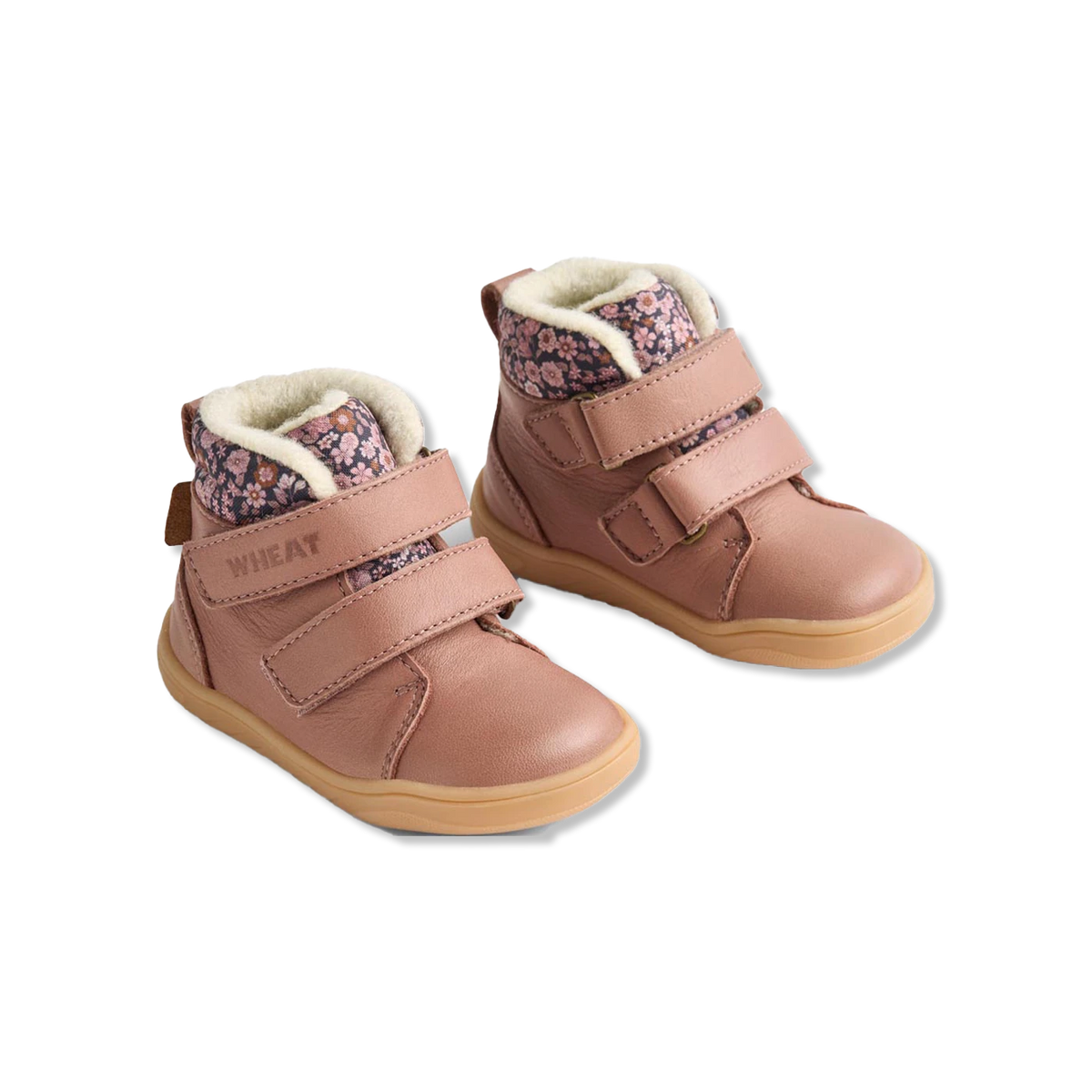
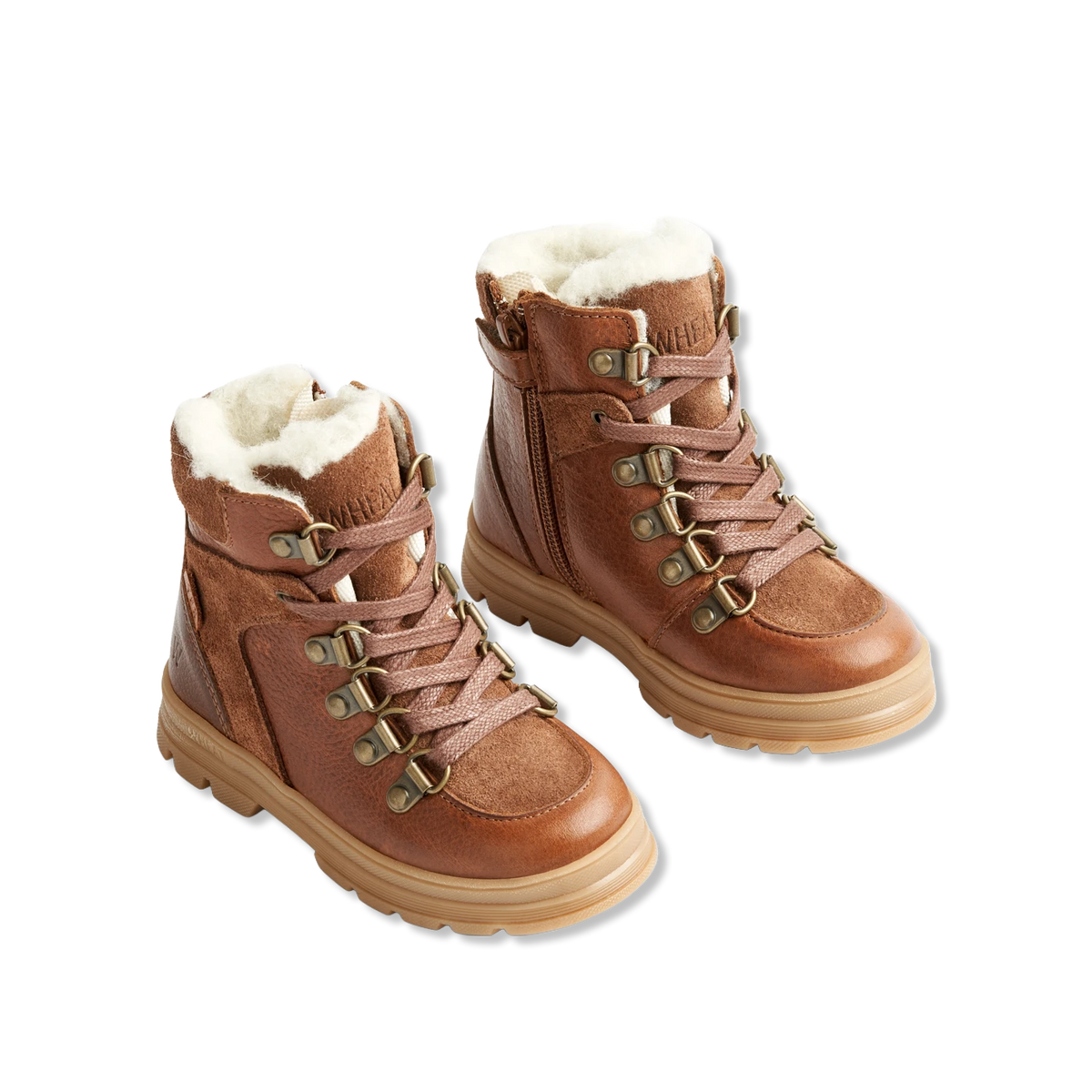
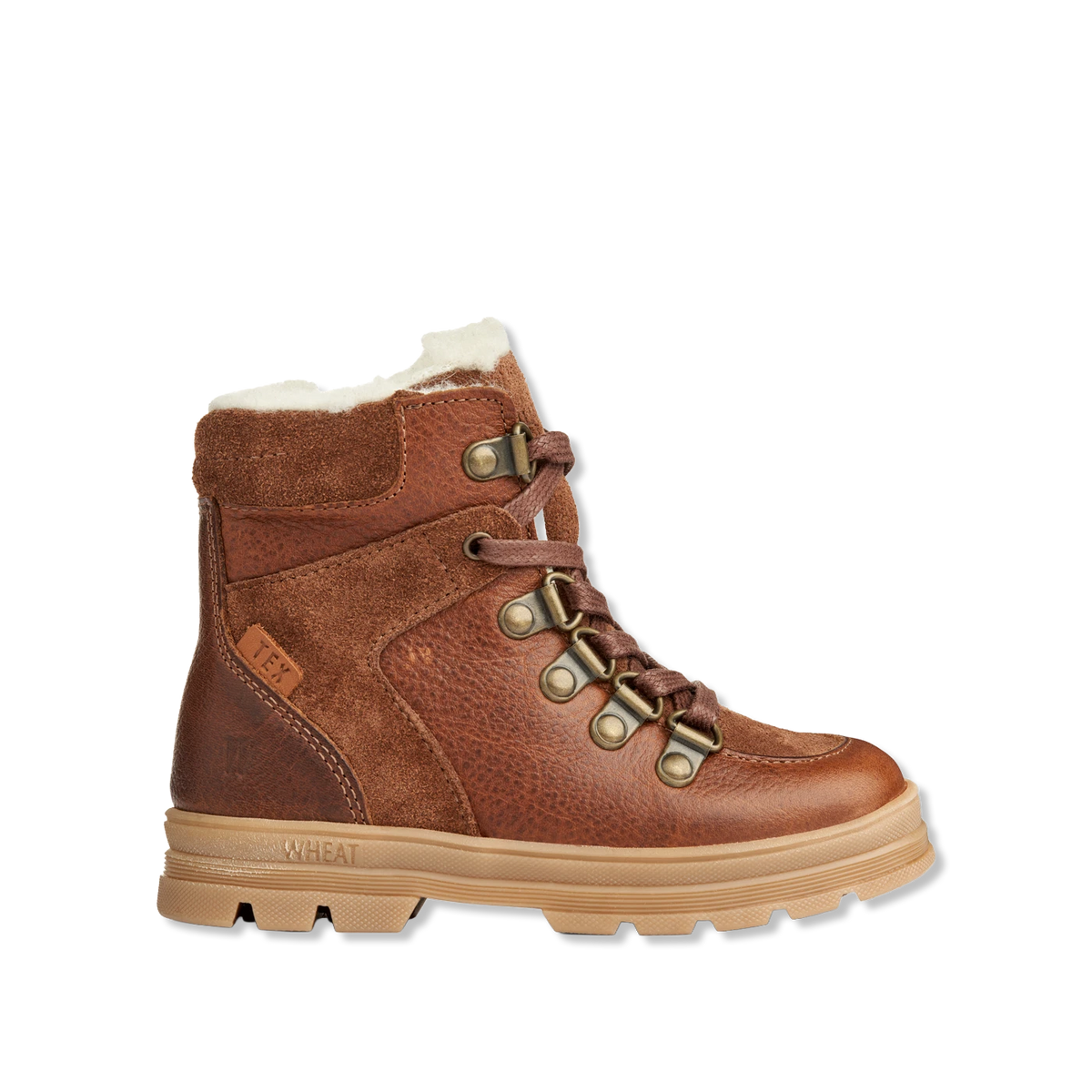
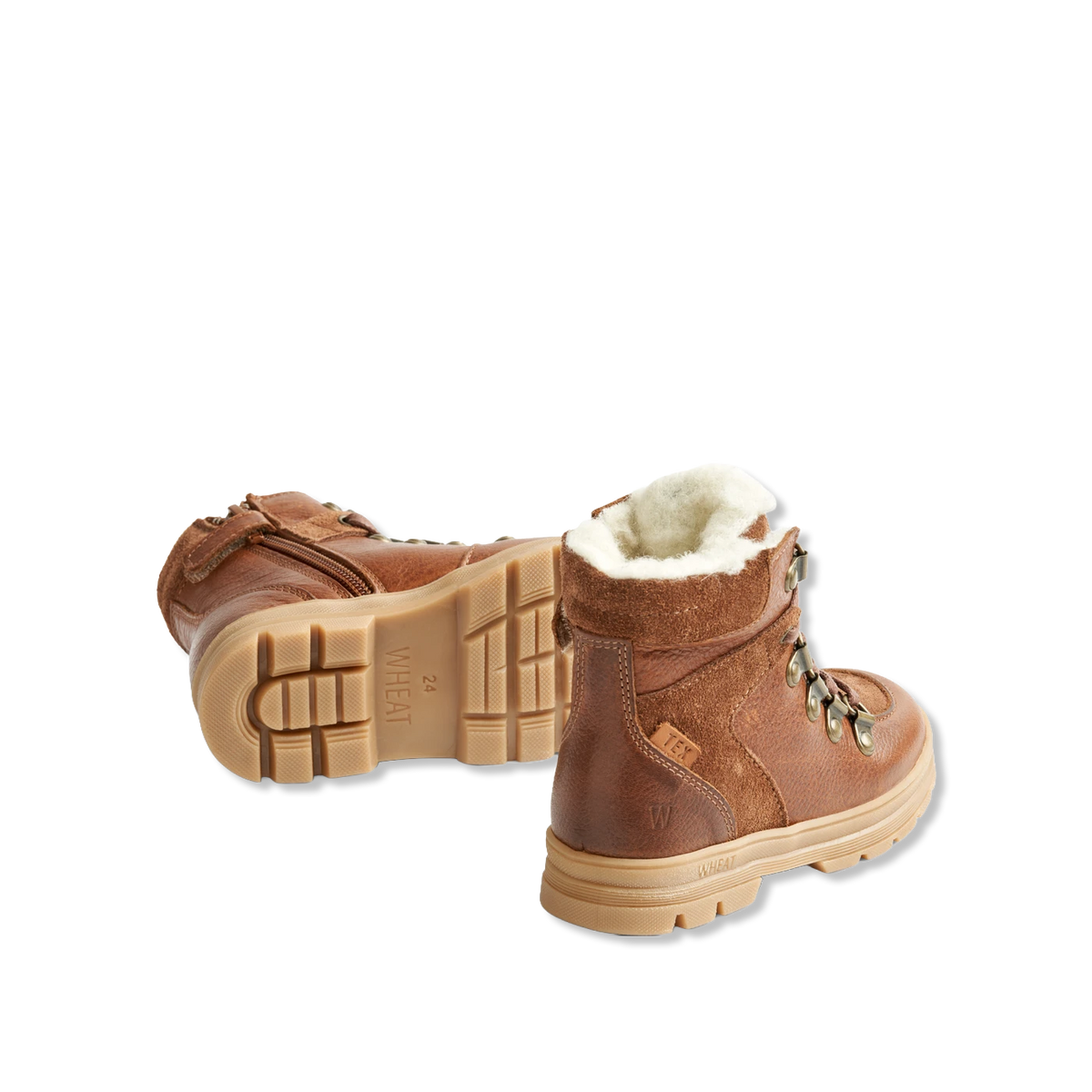
Wheat Footwear winter boots for children who need lightweight boots for changeable winter weather
Wheat Footwear winter boots are a great choice if you are looking for children's winter boots with a focus on low weight, freedom of movement and materials that work well for everyday wear. This category is especially suited to children aged around 2-10 years, where boots need to handle both the trip to nursery or school and hours of outdoor play.
What characterises Wheat winter boots is that they are not designed as heavy boots for long days in severe frost. Instead, they are made for a mild Nordic winter with rain, slush, snow and shifting temperatures. In these conditions, the lightweight construction and more breathable build make excellent sense, as they help keep children's feet dry and comfortable when they are on the move.
When choosing between Wheat Footwear winter boots, it is worth thinking about three things in particular: your child's age, how much the boots will be used for active play, and whether you mainly need a low model for town and everyday wear or a higher boot for more snow and wet ground.
Why many families choose Wheat winter boots over heavier alternatives
Wheat Footwear has a clear approach to winter shoes: less weight, more flexibility and a good balance between protection and breathability. This sets the brand apart from more robust winter boots, where insulation and stiffness are often increased.
In everyday life, this means that Wheat children's winter boots work well for kids who are always moving. A lightweight boot is easier to run, climb and play in, and a flexible sole follows the foot better than a very rigid model. At the same time, the sole is made with Nordic winter conditions in mind, helping children stand more securely on slippery pavements, wet tiles and uneven surfaces.
That is precisely why many families choose them for wet and changeable winter days, where the weather can shift several times in one day. If you are looking for a more flexible alternative to classic thermal boots or very heavy-duty winter styles, Wheat is an obvious place to start.
Wheat Footwear winter boots with linen and a breathable construction
An important part of Wheat Footwear winter boots is the use of linen-based materials, including in the insole. Linen naturally helps regulate both moisture and temperature, so feet are less likely to feel clammy when children move between the cold outdoors and warm indoor spaces.
It is also worth distinguishing between warm and dry. Many parents automatically choose the warmest boot, but in transitional weather too much insulation can quickly lead to sweaty feet. Wheat winter shoes are designed as a more balanced solution, keeping children well dressed for the colder months without the boot feeling heavy or closed around the foot.
Several models also feature a water-repellent upper and reflective details, which are useful on dark winter mornings. For families who want to choose with care, it is also a plus that Wheat Footwear often works with safe, skin-friendly materials and has a focus on OEKO-TEX.
How to choose the right model for age, activity and weather
The right choice is rarely only about size. It makes just as much sense to consider how the boot will be used from day to day.
A lower model often makes sense if:
- your child is younger and needs a lightweight boot for everyday play
- the boot will mainly be used for nursery, school, town and short trips
- you more often face rain and slush than deep snow
A higher model is often better if:
- your child plays a lot in snow or on wet playgrounds
- you would like more support around the ankle
- the boot needs to give better coverage at the trouser hem and in snow
On very wet days, it can also be useful to have a pair of wellies on hand, while Wheat winter boots are great for cold days when your child still needs to move freely and comfortably.
Size, fit and room for winter socks
Fit matters a lot in winter boots, as there needs to be room for movement and for a sock, without the boot becoming too large. Wheat linen winter shoes and winter boots are best chosen with your child's everyday use in mind, whether that is walks, nursery life, the school playground or longer periods outdoors.
A little growing room is a good idea, but not so much that the foot slides around. If the boot is too roomy, it can affect both grip and comfort, especially on slippery surfaces. Remember that a winter sock takes up more space than a regular sock. A pair of wool socks is a good addition, as wool helps keep the temperature more even without adding too much bulk.
If your child has wide feet, it can be helpful to look for models with a good opening and the option to adjust the fit with laces or Velcro. This makes the boots easier to get on and off, while allowing the fit to be adjusted more precisely.
A good choice for the winter wardrobe alongside shoes and outerwear
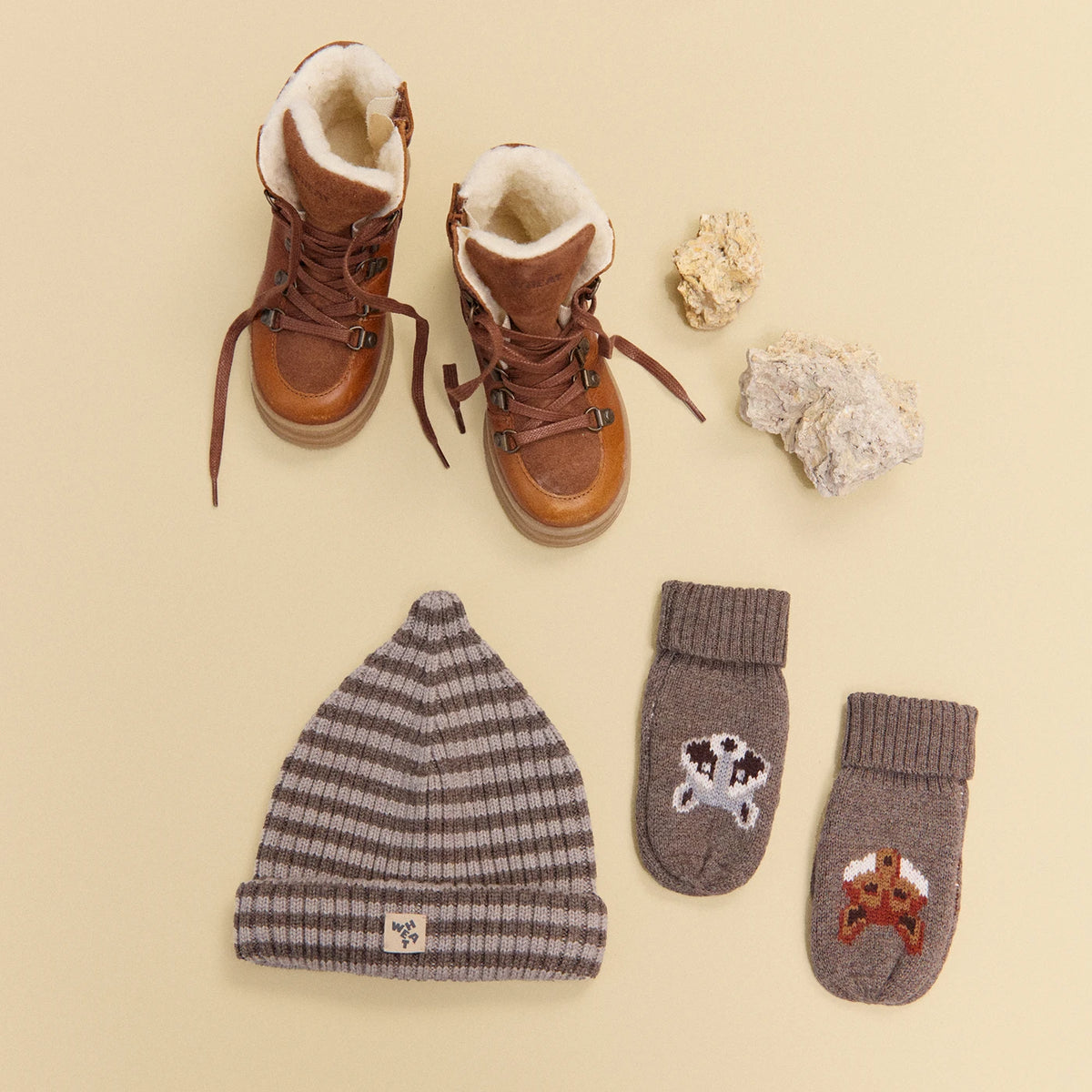
Wheat Footwear winter boots work best as part of a complete winter wardrobe, where shoes and outerwear match the weather your child will actually be heading out into. For a mild winter and days with changing weather, it makes sense to combine the boots with practical Wheat rainwear or other outerwear suited to wet and cool outdoor life.
If you would like a broader overview of seasonal footwear, you can also explore our selection of Wheat Footwear sneakers. They are a natural choice when winter loosens its grip, making it easier to build a wardrobe where your child has footwear for frost, slush and transitional weather.
Explore the selection of Wheat Footwear winter boots and find the model that suits your child's pace, fit and winter everyday life.